


We want to hear from you. You're viewing the newest version of the Library's website. Please send us your feedback!
What are scholarly and popular sources?
|
In your University career, you will need to use scholarly research for your essays and papers. With so much information available online, it is important for you to know the difference between scholarly and popular sources to ensure you are using high quality academic research. Watch this introductory video (2.06 min) for an overview on scholarly and popular sources. Used with permission from McMaster University Library. |
Components of a Journal Article
|
Information contained in a typical research article: Abstract: This brief paragraph provides an overview of the entire article. Introduction: This section introduces the topic or the research question being posed and discusses how the study complements or contributes to previous research and literature in the field. Methods: This section includes a description of how the study was conducted. Analysis and Results: This section discusses the results of the study or experiment and how the results were analyzed. Discussion and Conclusion: This final section interprets the results of the study and the research question posed. It will outline how the study contributes to the existing field of knowledge and possible directions for further research. References/Bibliography: This section lists all the publications cited within the article. |
Tips on how to read a scholarly article: Step 1. Read the abstract first. The abstract describes the topic of the article, the research question posed, the results and conclusions of the study. The abstract will help you decide if you wish to read the entire article. Step 2. Skim the introduction and discussion/conclusion sections to familarize yourself with the main arguments, research results and conclusions. With this basic understanding of the information provided, decide if you wish to pursue an in depth reading of the article. Step 3. Carefully read each section in depth. Take notes and clarify any terminology or concepts you do not understand. Identify the key information presented in the article and how it may apply to your own paper or assignment. In many cases, students have not yet developed this expertise and can find the material confusing and difficult to read. Don't get discouraged. Over time, you will have gathered more knowledge about health topics through your courses and you will become more experienced at reading journal articles. |
What is the difference between scholarly and popular sources?
| Popular Magazine | Scholarly Journal | |
| Appearance |
- Eye-catching cover that highlights magazine's content - Many pictures and illustrations in colour - Uses glossy paper   |
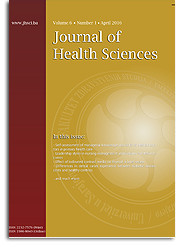
- Plain cover that lists journal name, date, volume, issue number, and ISSN - Limited illustrations are usually black and white graphics, tables, or graphs accompanying an article |
| Advertisements |
- Contains a lot of advertisements |
- Few or none |
| Audience |
- General public
|
- Researchers, academics, students, and professionals
|
| Content |
- Current events or general interest articles - Not original research |
- Original research and review articles - In-depth analysis |
| Authors |
- Articles written by journalists and freelance writers - Authors may be anonymous |
- Researchers, academics, scholars - Experts in the subject - Author names and institutional affiliations given
|
| Citations |
- Rarely cites sources or includes a bibliography - Reference to sources vague (A study shows...) as opposed to a full citation |
- Complete citations and bibliographies always present |
| Other Characteristics |
- Articles use easily understood language and do not require any special knowledge - Issues are published frequently, on a daily, weekly, or monthly basis - Purpose is to entertain readers and promote/sell products - Articles tend to be shorter in length |
- Articles use scholarly and technical language which assumes the reader is knowledgeable in the topic - Issues published less frequently, on a monthly, quarterly, or yearly basis - Articles are intended to present original research findings and communicate ideas to other scholars in the field - Articles tend to be longer in length |
| Examples |
- Natural Health - Macleans |
- Journal of Sport Management - Journal of Leisure Research |